
Wildlife and bird videography for beginners

Barred Owl
If you’re a beginner and you want to get into wildlife and birding/birdwatching videography and/or photography…you can probably find a ton of resources and teachers better than me! ;)
That said, I enjoy sharing what has worked for me in the field. Especially with the benefit of 20/20 hindsight. The key phrase here is “in the field”, as once again, learning how to use your camera can be left to better teachers than me.
So let’s assume you peripherally understand the exposure triangle, generally how to work your camera, map the buttons, program different modes, even edit and export videos and photos at respectable resolutions for various platforms. Now you want to get out into nature - or maybe just film birds at feeders in your yard - which is totally fine too!
The one mistake I’ve seen people continuously make when I’ve taken them out into the field to film wildlife and birds? Native ISOs.
In terms of filming video…most modern mirrorless cameras have a native ISO, and some even have 2. The quick and dirty non-technical definition of that is: a base ISO where your camera is going to have the cleanest image. If it is a slightly older DSLR or even an earlier mirrorless like my first model (Sony a7III), the lower the ISO the better.
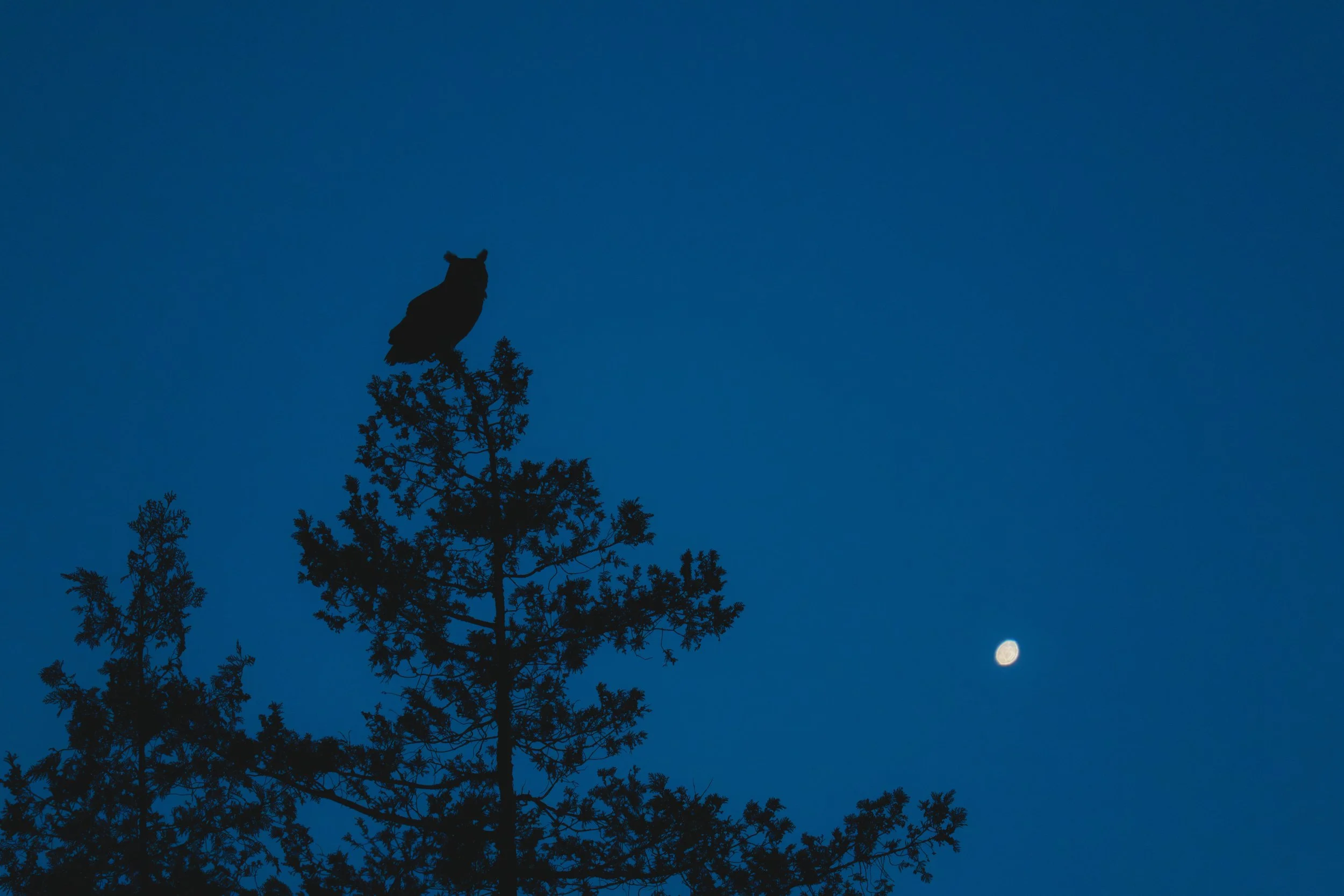
I was shocked when I brought some friends into the woods and introduced them to (local) wildlife and bird videography and they seemingly had no grasp of their cameras native ISOs. On the flip side of that, a shady forest in the middle of the daytime can be quite dark. You’d be surprised. So there’s also the reality of accepting when the shot just isn’t there as well. I’ve even seen my Sony FX3 at its 2nd native ISO of 12,800 not get the job done around sunrise or sunset in the woods. *Photography is much more forgiving when you have these darker, shadier conditions.
The second mistake I’ve seen, and this one shocked me even more?
Bird/animal tracking focus modes.
Meaning, the aforementioned friends I brought out into nature to film and photograph birds and wildlife didn’t even think to change their subject tracking mode.
So again, outside of generally grasping the exposure triangle, how to compose an image, programming your cameras buttons, etc…just that little subject tracking switch from human to bird/animal makes a huge difference (assuming your camera - as most modern cameras do - have it).
I suppose my bonus tip here would be to utilize a modern camera’s ability to customize buttons and pre-program different shooting modes. Recently with a friend, every time he had to change his ISO or subject tracking or anything else…he was digging into his menus to do so. By the time he got it setup, the animal was gone!
Check out my video below breaking down these tips (and more).
I could go on and on, but I’d like to let the above video do the talking! Especially as it pertains specifically to wildlife (and less so about the camera specs).
Again, if you want to learn the ins and outs of your camera/settings…there are better teachers and more in depth videos than I could ever create.
The reality is, I think my work has a long way to go. But I firmly believe in starting small, local, in your own backyard - literally and figuratively speaking - when learning wildlife and bird videography as a beginner.
And although my work does have a long way to go, I’m proud of where I’ve gotten to. Looking at some of my first images and videos compared to now is like night and day.
There is no substitute for practice. Getting reps in, failing, learning, trying again, rinse, repeat. That’s the best way to learn wildlife and bird videography. And any other kind for that matter.
The next step, for me?
Filmmaking.
I made a couple videos talking about this too. Using that lovely, oft used keyword of “filmmaking” to garner views on my YouTube channel (which I have recently, finally, thankfully, trusted my gut and pivoted entirely to conservation and wildlife content)…even though I had never actually made a film about wildlife.
So here’s to hopefully changing that in the near future.
